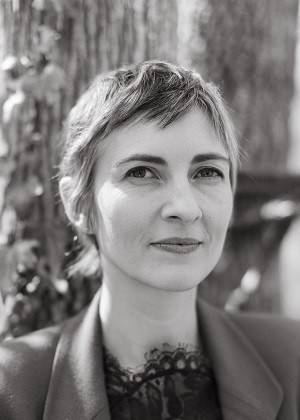
Emerging Poet Feature: Janiru Liyanage
Janiru Liyanage is a young poet porous to Beauty. I love how his lines unspool like so much golden thread glowing under hazy sunlight. They feel bountiful, endlessly generous, fine. The poems’ concerns–Liyanage’s mother and family, spirituality, stories and history, identity, language itself–are common (or classic) poetic concerns made particular by the poet in all their familiarity and strangeness: the mother’s chipped necklace, the deer statue that turns out to be a real deer, the wonderful malapropism of “biblical chord.” In particular, I see troubling the waters of these poems the difficulty of distinguishing the real from the false, a theme of fairy tales that has only become more important and more fraught in our times.
Liyanage has agreed to share two new poems with us here in addition to “The Deer” from Issue Number 44. Read on for our discussion, and to follow the winding threads where they lead.
—Sarah Rose Nordgren
 Janiru Liyanage is a student writer, with recent work in Agni, Gulf Coast, The Slowdown, and elsewhere. He has produced work for Australian Poetry, The Wheeler Centre, and The Emerging Writers’ Festival, among other places.
Poems:
“The Deer” (from 32 Poems #44)
“Broken Ghazal Unspooling Like My Mother’s Fake Necklace” (featured here)
“On the Sunday before My Family Has to Leave the Country, Our Pastor Gives a Sermon” (featured here)
Interview:
SRN: Janiru, can you tell us a little about your poetic origins? When I read your poems, I get a sense of your deep attunement to Beauty coupled with what feels like a childlike wonder. Your mother also comes up in your poems a lot, and feels like a central figure for your writing and your worldview. Where do you locate the roots of your poetry?
JL: Thank you so much for such a thoughtful and kind reading! Actually, it was my mother who first helped me learn to read and write. When I was very young, my mother and I would, every now and then, visit the library and spend the afternoon reading books together, examining and piecing together how stories function, unfold, and invite readers into their quiet, sincere beauty and wonder. Although we didn’t have the formal vocabulary for how these stories operated, we, together, uncovered the power of a story’s conflict, its rise and swell, and the way it moves through plot by building tension and then relieving it. Books were a way we found solace despite our shared loneliness. I think this is the root of my writing. When my mother was at work, I’d spend my time waiting for her by reading in the library after school, carrying on this practice.
Though I always saw writing as a means of connecting with my family, I only started writing about my mother or my family with sustained attention recently. Before, I didn’t think ‘family,’ let alone my own family, was considered “serious” literature. However, over time, as I grew older, I started to become increasingly cognizant of how much of a role my family, especially my parents, has played in my life. It’s cliché, but my parents sacrificed a lot–– my father, through his devotion and hard work, and my mother, struggling to balance both her career and caring for us at home. When she became chronically ill, this awareness of how much work she did for us intensified–– though that work is often silent, invisible and goes unrecognized. This kind of silent, invisible work became a significant theme in my writing thereafter. I think maybe it’s because it reminds me of the times we’d go to the library together, tucked away in a small corner table, reading.
With regards to Beauty (thank you for capitalizing that), and childlike wonder, I think it’s also rooted in this gaze towards the quiet, invisible labor that happens everywhere. I keep thinking about the quote by Saint John Chrysostom, “If you cannot find Christ in the beggar at the church door, you will not find Him in the chalice.” I think the same sentiment applies to Beauty. My mother, despite everything, strives to somehow find the quiet, humble, Beauty in life. I hope to do this through writing.
SRN: I love the quotation you shared, and it feels relevant to the feelings of abundance and humility I find in your poems, an attention not just to the lowly or unexpected detail, but a desire to let everything into the poem with an almost Whitmanian sense of welcome (both the beggar and the chalice). In “Broken Ghazal Unspooling Like My Mother’s Fake Necklace,” for example, the pure gold of a necklace is put beside vomit stains, foil chocolate wrappers, a foot, a name, and the long winding lines feel so full that they droop and break down the page with the weight of them.
I’d love to hear how you think of the line in your poems—do you have a philosophy or sense of your lines that you can share with us?—as well as what you invite into your poems and what you choose to leave out.
JL: Thank you so much for noticing—I recently realized that I’ve been writing longer and longer lines, in that same vein of trying to fit as much into the line as possible. When I write, I don’t consider a conscious reader, other than my future self, critiquing and editing the work. However, even for that imagined reader (future me, a harsh critic), I found that the line is the smallest unit of delivering meaning, and the shortest “guaranteed” measure of attention from a ‘reader’ (myself), imparting information, rhythm or lyric to set the stage for a proceeding turn or volta in the next line. I’m not sure if this makes total sense (as I’m also still figuring it out), but another way I could put it is that, at least recently, I feel like I have the line and only the line (if even that) to convince the ‘reader’ that these words have purpose, function and meaning in the poem. It’s this kind of anxiety that the line is the be-all end-all in that moment of time as my future self reads the poem. And I think it’s that kind of anxiety where, as you say, this Whitmanian desire to put everything into the line precipitates from.
This method of writing works with the future me who will edit the first or second draft of a poem, where then the editing becomes a process of cutting and chiselling away. To that end, in the first draft of writing a poem, almost everything (and then some) goes into the line, and it becomes the job of editing to remove images and scenes from the poem. What gets taken away often ends up being repeated images, phrases that serve purely sonic functions, etc.
I’ve been using this mode of writing and editing much more often with lyric and paratactical, list-like poems, more than narrative poems (in those cases, the ‘rules’ around lines, lengths and breaks, are often more fluid or rely more on rhythm and sonics).
SRN: I love your poem “The Deer,” from Issue #44, and my fascination with and questions around it were what made me want to interview you for this feature. Like many of the best poems, this one feels resonant with the mysteries of humanhood and isn’t afraid of bewilderment. Particularly, I’m fascinated by how you introduce relationships between the figures of you and your father, your mother (off-stage), and the deer, evoking predator and prey dynamics, as well as exploring ideas around gender, authenticity, and language. There is so much I could say here, but I’ll just mention that I feel a relationship between the mother and the deer for sure–their vulnerability in contrast to the men who are animals “who eat other animals.” You also connect the mother to language and writing itself, writing “like all men, I write about my mother as if she is punctuation.” Can you share a little about how this poem came to be and your experience writing it? The piece has such a wonderful sense of surprise, as if I’m following the poet’s wandering through the woods of the poem and arriving unexpectedly at its ending.
JL: Thank you so much! The poem came from, like most of the narrative poems I’ve been writing recently, a walk I took, this time, with my father and brother through a nearby nature reserve. My mom couldn’t come that day since she was suffering from a migraine, and walking in the sun would have made it worse.
We had just entered the reserve before the track opened into a small clearing, a field with waist-high grass. And there it was, right in the middle of the field. It was such a wild image to me—I had never seen a deer in real life before. All I kept thinking was how large this creature was (I’d seen them obviously in movies and it’s such a ubiquitous animal and symbol in literature so even talking about a deer this way feels almost silly, but it’s one thing to see an animal in a video and it’s another thing to have it staring right at you just a few feet ahead).
I can still remember the image so clearly—it was summer, sunlight was pouring in and illuminated a crown of gnats circling the grass. It felt so much like a scene torn straight from a dream; there wasn’t particularly anything about the deer or the moment, just the strangeness and beauty of it all.
I knew that this image was going into a poem somehow, and I kept thinking about William Carlos Williams’ philosophy, “no idea but in things.” Here, the “thing” was the deer, and the image was so still and so perfect that I thought the poem I’d write about it would merely be that—a distilled, concrete image of a deer. And then my dad said it wasn’t real, then the deer moved, and he immediately took that back. In him, I saw that same boyhood wonder I just experienced moments ago. Something about that small connection, of seeing myself in my father, sparked this idea of boyhood that weaved its way into the poem. And in thinking about the deer, this ubiquitous image of poetry, and my mother, who was still sick at home with a migraine, made me think of the kind of contradiction that exists between the objects literature prizes and what they are instead relegated to in real life; becoming a piece of punctuation around which sentences are constructed and shrines to language are built.
I’d also been thinking about punctuation a lot in general, and the rules of grammar and syntax have been very interesting to me—how these strange shapes, a curled comma, and decapitated semi-colon, an em-dash, all modulate language, meaning and power despite being such physically small typographic elements on the page. This juxtaposition between the importance of punctuation and how often it is instead relegated to small spaces on the page (until one day you are confronted with its weight, like a deer suddenly appearing in a field you had visited many times before) felt like an apt metaphor for the work my mother does. Those elements collided in the poem as I was writing it. It was a poem that I wrote in one sitting, in a version pretty close to its final draft. I think I had been thinking for a while about this hidden work my mother does (and the work my family does in general). The deer was a catalyst where the act of writing the poem itself felt like, maybe not unravelling, but being able to place those elements together in conversation with one another.
SRN: Are you working on anything or looking forward to anything in particular right now that you’d like to share about? What has you excited these days?
JL: I’m mostly just writing poems, and I’m slowly noticing how the poems are beginning to orbit one another and talk to one another. The weather where I’m staying at the moment is lovely, and that makes the work of writing beautiful also, so I’m very grateful for that!